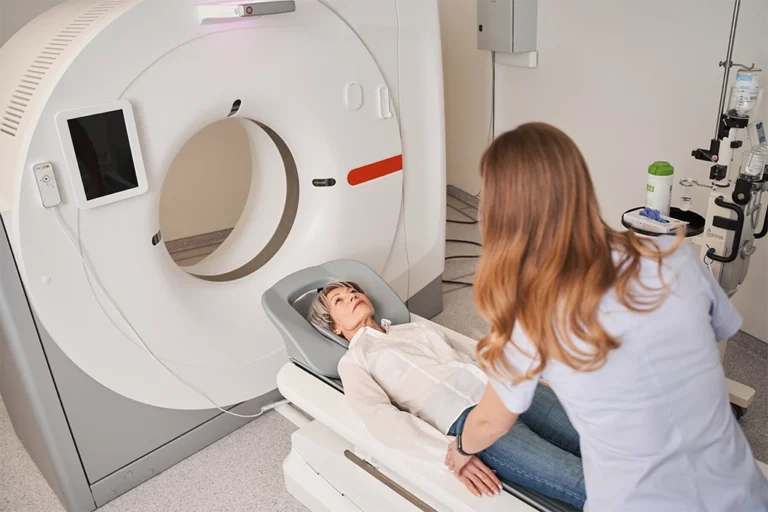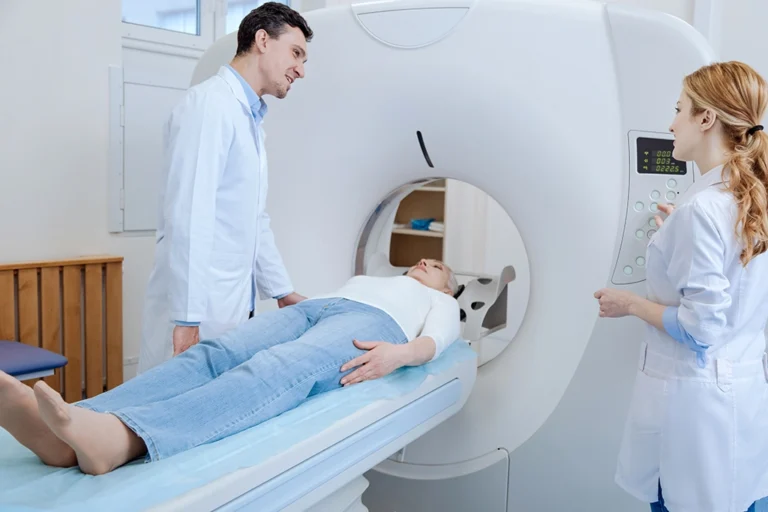
When your healthcare provider recommends a diagnostic imaging scan, you might have questions about the technology, the process, and what it means for your health. Among the most common imaging options are computed tomography (CT) scans, which use advanced X-ray technology to create detailed, cross-sectional views of the body’s internal structures. However, not all CT scans are the same. Today, innovative low-dose CT technology has been developed to support screening programs that require ongoing monitoring, such as lung cancer screening, by reducing radiation exposure without affecting the quality of the results.
- Tumors and masses. Provides insight into a tumor’s size, shape, and location.
- Infectious diseases and other conditions. Assess complications from conditions such as abscesses or severe pneumonia complications, including scarring and inflammation. Additionally, CT scans can help identify common ailments such as appendicitis, diverticulitis, and pancreatitis.
- Traumatic injuries. Effective for identifying bone fractures, internal bleeding, and organ injuries in emergency situations.
On the other hand, low-dose CT scans are highly sensitive and can detect concerns that standard CT scans might miss. Key findings include:
- Early tumors. Helpful for identifying tumors at their earliest stages in the lungs, thyroid, kidneys, esophagus, and other areas, especially in the chest.
- Nodules and other structures. Often benign, the size and growth of nodules, cysts, or fibroids in various organs are monitored closely.
- Incidental findings. May reveal early signs of conditions like chronic obstructive pulmonary disease (COPD), emphysema, interstitial lung disease, or even cardiovascular issues like aortic aneurysms.
When would a doctor order a low-dose CT scan instead of a regular CT scan?
A healthcare provider will order a low-dose computed tomography scan instead of a regular diagnostic scan when the goal is preventive screening rather than active diagnosis. The most common application for low-dose technology is screening for lung cancer in high-risk individuals. Because screening is designed to be repeated annually, minimizing radiation exposure is a top priority.
The U.S. Preventive Services Task Force (USPSTF) recommends yearly screening for lung cancer using LDCT for individuals who meet all of the following criteria:
- Age eligibility. Adults who are between 50 and 80 years old (Note: Medicare coverage eligibility applies to individuals between the ages of 50 and 77 years)
- Smoking history. Individuals with a tobacco smoking history of at least 20 pack-years (a pack-year history is calculated by multiplying the average number of packs smoked per day by the number of years smoked)
- Smoking status. Current smokers or former smokers who have quit within the last 15 years
- Symptom status. Individuals who exhibit no signs or symptoms of lung cancer
If you meet these high-risk criteria, annual screening is a simple step that can help you stay ahead of any changes.
What is the most common reason for a CT scan?
While low-dose scans are reserved for asymptomatic screening, the most common reason for a standard CT scan is to evaluate active symptoms, diagnose injuries, or monitor existing conditions. Standard CT scans provide rapid results, making them the preferred tool in emergency and acute care settings.
A doctor frequently orders a standard CT scan to:
- Evaluate trauma. Quickly identifying fractures and assessing damage to internal organs or detecting internal bleeding.
- Investigate acute symptoms. Evaluating cough, chest pain, fever, or shortness of breath
- Diagnose vascular conditions. Identifying blood clots, arterial blockages, or coronary artery disease
- Track treatment. Assessing the size and location of a tumor over time to measure treatment progress
View our available CT appointments at a location near you today
How does a low-dose CT scan work?
A low-dose CT scan is quick, simple, painless, and non-invasive. No special preparation is typically required, and you can usually eat, drink, and take medications as directed by your doctor.
A low-dose CT scan is quick, simple, painless, and non-invasive. No special preparation is typically required, and you can usually eat, drink, and take medications as directed by your doctor.
- You will lie on a table that slides slowly in and out of the doughnut-shaped CT machine.
- An experienced CT technologist will perform the scan and guide you through an intercom.
- You will be asked to hold completely still, and you may be asked to hold your breath for a few seconds to help produce the clearest possible images.
- The scanner will rotate around your body to capture detailed, cross-sectional images of your body from multiple angles.
- The screening itself takes less than five minutes to complete, and most patients spend only 20 to 30 minutes at our centers.
Choose South Jersey Radiology for your CT scan
At South Jersey Radiology Associates (SJRA), we are committed to making life-saving early detection simple, accessible, and comfortable. With 11 convenient outpatient locations across South Jersey, evening and weekend hours, and same-day or next-day appointments at select offices, we fit screening into your busy schedule.
- While standard and low-dose CT scans are essential, they serve different purposes.
- Low-dose CT scans use up to 80% less radiation than standard CT scans and are a preventive screening test for asymptomatic adults at high risk of developing cancer, whereas standard CT scans are ordered to evaluate active symptoms or investigate abnormal findings.
- Understanding these distinctions can empower you to make informed decisions about your health and screening options.
Our scans are interpreted by board-certified, subspecialized radiologists who read over 3,800 lung screenings annually, bringing deep clinical experience to your care. Plus, our outpatient imaging costs up to 60% less than hospital-based facilities.
Frequently Asked Questions
A low-dose CT scan typically takes about 10 to 30 minutes from start to finish. Most of this time is spent preparing and positioning someone inside the machine. The actual scan takes around five minutes to complete.
The radiation exposure from a low-dose CT scan is significantly lower than that from a standard CT scan. A low-dose CT scan is designed to minimize risk while still providing necessary diagnostic information.
While low-dose CT technology is a valuable tool for the early detection of lung cancer, the results of a lung cancer screening test may sometimes be inconclusive. In such cases, further follow-up tests, such as a standard diagnostic CT or PET/CT, may be necessary to clarify the findings.
At South Jersey Radiology, our board-certified, subspecialized radiologists interpret each exam using standardized reporting frameworks, such as the Lung-RADS® scoring system, to classify results accurately and ensure you receive the most appropriate follow-up care.
South Jersey Radiology Associates offers high-quality CT scans at multiple locations. To schedule an appointment, you can contact any of the following locations:
• Haddonfield Office – Haddonfield, NJ
• Marlton (Greentree) Office – Marlton, NJ
• Medford Office – Medford, NJ
• Moorestown Office – Moorestown, NJ
• Mount Laurel Office – Mount Laurel, NJ
• Route 73 (Voorhees) Office – Voorhees Township, NJ
• Turnersville Office – Turnersville, NJ
• Voorhees (Carnie Blvd) Office – Voorhees Township, NJ
• Sewell (Washington Twp) Office – Sewell, NJ
• West Deptford Office – West Deptford, NJ
• Willingboro Office – Willingboro, NJ