







Mammo with Cardiac Screening

Mammo with Cardiac Screening at South Jersey Radiology

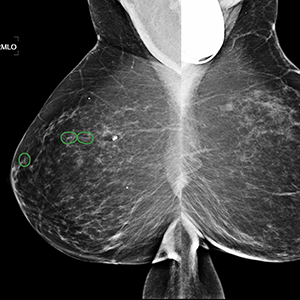
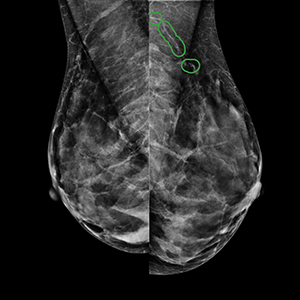
Mammo with Cardiac Screening is an advanced analysis tool to turn your screening mammogram into a dual purpose study by checking for the presence or absence of calcium buildup in your breast arteries, also known as breast arterial calcification (BAC). In a clinical study published by the Journal of American College of Cardiology (JACC), researchers found that an elevated BAC score is an indication of long-term cardiovascular risk.

By identifying this risk indicator early, this screening provides a signal for you to speak with your doctor about factors affecting your heart health and if further tests are right for you. This analysis is not a diagnostic cardiac test, but allows you to check both your breast health and rule out one of the most common heart health risk factors in a single visit, with no extra radiation and no extra time.

Who is it recommended for?

Mammo with Cardiac Screening is recommended for all woman age 40 and over who are coming in for their routine screening mammogram. Because the risk of both breast cancer and heart disease increases as we age, this is the right time to screen for both. This approach is seamless and helps you:

  • Capture a more complete picture of your long-term health
  • Guide conversations with your primary care provider or cardiologist
  • Identify early signs of heart disease in women

While annual screening mammograms are covered in full, 100%, for all women starting at 40, Mammo with Cardiac Screening is not currently covered by insurance providers at this time. The out-of-pocket cost is $120 and is eligible to be paid for by using your health savings account (HSA) or flexible savings account (FSA).

Our Mammo with Cardiac Screening Locations

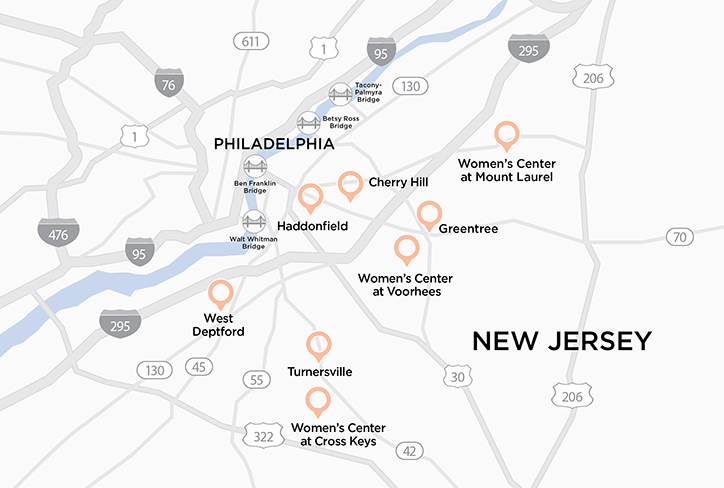
South Jersey Radiology provides screening mammograms with cardiac screening across 8 of our office locations. SJRA offers evening and weekend hours with select locations offering same-day and next-day appointments to meet your busy schedule.

Locations Providing:

24/7 Online Scheduling

Icon-Mammogram

Step 1: Select Your Study & Insurance

Choose “Mammogram” under appointment type and primary insurance.

Questionnaire-Icon

Step 2: Fill Out Our Brief Questionnaire

Answer our screening questions, and select the option for cardiac screening.

Select-Date-And-Time-Icon

Step 3: Choose Your Date & Time

Select from one of our locations that works with your schedule.

Online-Self-Scheduling-Sign-In

Step 4: Log In to Your Account

Create or log into your appointment management dashboard to confirm.

Patient Reviews

South Jersey Radiology provides inviting outpatient facilities accompanied by friendly and supportive staff, making for a comfortable experience for our patients.

What to expect during your Mammo with Cardiac Screening

Mammo with Cardiac Screening uses AI technology approved by the FDA to enhance the findings on your screening mammogram by applying a specialized filter to the images. This filter identifies and quantifies calcium deposits in the arteries running through your breast. While breast arterial calcification doesn’t have any effect on your risk for breast cancer, growing clinical evidence shows these calcifications may be an early sign of heart disease.

Adding Mammo with Cardiac Screening to your mammogram appointment is seamless. When scheduling your mammogram online or over the phone, you will be prompted to add it as an adjustment to your screening. The preparation for your mammogram will remain the same.

View our available Mammo with Cardiac Screening appointments at a location near you today

Understanding Your Results

Once your Mammo with Cardiac Screening is complete, one of our board-certified radiologists will analyze the findings and develop two separate reports. One report will be focus on any findings tied to your breast tissue while the additional report will focus on any findings related to breast arterial calcification (BAC). BAC is categorized on a 4-point scale (0 – 3):

  • 0 – No calcification present in the breast arteries
  • 1 – Mild arterial calcifications present, no coarse or tram track calcifications
  • 2 – Coarse or tram track calcifications identified in fewer than three vessels
  • 3 – Coarse or tram track calcifications affecting three or more vessels

Your doctor will receive both reports, and analyze them alongside other parts of your medical history such as blood tests, current and past medications, and more. Your doctor will explain to you what was found, answer of any of your questions, and talk through next steps if needed for assessing your heart health.

Where you go matters for your breast health

Since 1938, South Jersey Radiology Associate (SJRA) has been recognized as the region’s experts, with a team of radiologists specializing in breast health offering screening and diagnostic imaging all in one place.

Mammo with Cardiac Screening Frequently Asked Questions

What is it?

Mammo with Cardiac Screening is an advanced analysis tool to turn your screening mammogram into a dual purpose study by checking for the presence or absence of calcium buildup in your breast arteries, also known as breast arterial calcification (BAC). In a clinical study published by the Journal of American College of Cardiology (JACC), researchers found that an elevated BAC score is an indication of long-term cardiovascular risk.

By identifying this risk indicator early, this screening provides a signal for you to speak with your doctor about factors affecting your heart health and if further tests are right for you. This analysis is not a diagnostic cardiac test, but allows you to check both your breast health and rule out one of the most common heart health risk factors in a single visit, with no extra radiation and no extra time.

Who is it recommended for?

Mammo with Cardiac Screening is recommended for all asymptomatic women age 40 and over who are coming in for their routine screening mammogram. Because the risk of both breast cancer and heart disease increases as we age, this is the right time to screen for both. Since heart disease oftentimes develops without any symptoms, this analysis can help rule out one of the potential risk factors without the need of any additional visit.

At this time, patients with breast implants are not eligible for Mammo with Cardiac Screening.

How does it work?

Mammo with Cardiac Screening uses AI technology to enhance the findings on your screening mammogram by applying a specialized filter to the images. This filter identifies and quantifies calcium deposits in the arteries running through your breast. While breast arterial calcification doesn’t have any effect on your risk for breast cancer, growing clinical evidence shows these calcifications may be an early sign of heart disease.

How do I request this with my mammogram, and do I need a referral?

Adding Mammo with Cardiac Screening to your mammogram appointment is seamless. When scheduling your mammogram online or over the phone, you will be prompted to add BAC screening as an adjustment to your screening. The preparation for your mammogram will remain the same.

If you have a referral for a routine screening mammogram, you do not need a separate referral for the additional cardiac risk assessment. It is performed automatically as part of our comprehensive screening protocols when the option is selected.

Is this approved by the FDA?

Yes, the breast arterial calcification detection and localization software used by South Jersey Radiology Associates (SJRA) is cleared by the FDA.

Is it covered by my insurance?

While annual screening mammograms are covered in full, 100%, for all women starting at 40, Mammo + Cardiac Screening is not currently covered by insurance providers at this time. The out-of-pocket cost is $120 and is eligible to be paid for by using your health savings account (HSA) or flexible savings account (FSA).

Why is breast arterial calcification important?

Heart disease is one of the leading causes of death for women, yet it is often “silent,” showing no symptoms until a major event happens. Clinical research from the Journal of Breast Imaging shows a strong link between calcification in breast arteries with cardiovascular conditions such as coronary artery disease, heart failure, stroke, and peripheral arterial disease. By identifying these markers early, you and your doctor gain a head start on prevention, allowing you to make lifestyle changes or have additional heart screenings conducted.

When will I get my results, and are they separate from my mammogram?

Once your Mammo with Cardiac Screening is complete, one of our board-certified radiologists will analyze the findings and develop two separate reports. One report will be focus on any findings tied to your breast tissue while the additional report will focus on any findings related to breast arterial calcification (BAC).

Your doctor will receive both reports prior to your next follow up with them, and analyze them alongside other parts of your medical history such as blood tests, current and past medications, and more. Your doctor will explain to you what was found, answer of any of your questions, and talk through next steps if needed for assessing your heart health.

If breast arterial calcification is present on my mammogram, what do I do next?

If breast arterial calcification is present, we recommend consulting with your primary care doctor or cardiologist to see if further cardiac evaluation or treatment is right for you.

If I don’t have it, does that mean I don’t have coronary artery disease?

If the findings from your Mammo with Cardiac Screening are normal, it doesn’t mean you do not have coronary artery disease. Calcium build up in the breast arteries is a potential warning sign, but is not the only warning sign. It is important to discuss with your primary care doctor or cardiologist next steps.

If a deeper look is needed, our team offers advanced cardiac imaging, including cardiac CTA and CT calcium scoring, to assess for other signs of heart disease outside of breast arterial calcification.